
Saint Paul Bread Club
We knead to bake!
Page Menu
Other Links:
See Also:
- Community Ovens Links US Community Ovens Map revised in July, 2014
- Non-US Community Ovens Links
- Community Ovens on Facebook
A New York Times Magazine article for October 6, 2010 by Michael Pollan, “The 36-Hour Dinner Party,” mentions what they called a “community oven.”
I don’t think it really was a community oven, at least I understand the term; I was not alone in this view.
Comment 15 on the article mentions a New York community oven and then references this very page of the Saint Paul Bread Club Quest for Ovens site as a directory of community ovens.
I count that as great recognition for the effort that I have put into maintaining these pages. Thank you, “Food Snob,” whoever you are.
If you are associated with or know of a community oven anywhere in the world that is not already on the links page, please send me an e-mail, and I will add them to the link collection. (If they don’t have an associated web page somewhere, I’ll still gladly take whatever description and contact information you can provide for this page.)
Community Oven versus Public Oven
It is worth noting that a community oven is not the same as a public oven.
A community oven is for use by a community however that community choosed define itself. An oven on private property can be restricted for use by the owner of the property. That restriction might be to people who live in the immediate neighborhood. An oven on church property might be for use by the church members only.
A public oven on the other hand is on public property. It would be open to use by members of the public either as individuals or as a self-selected group.
Twin Cities Community Ovens
As of 04/19/2014, there are several more community ovens in progress.
Completed Community Ovens
The 16th Avenue Pizza Collective
Minneapolis, Minnesota
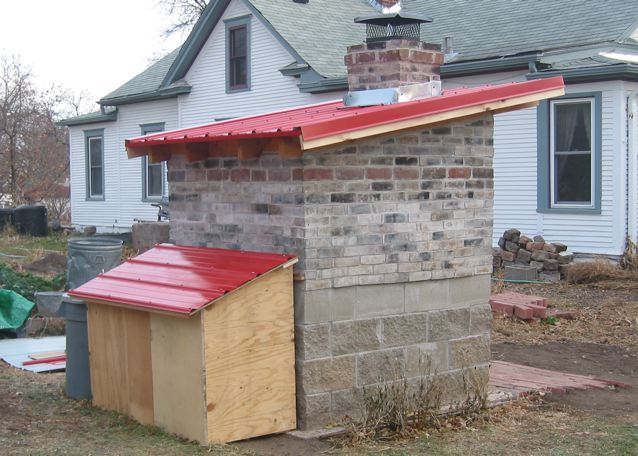
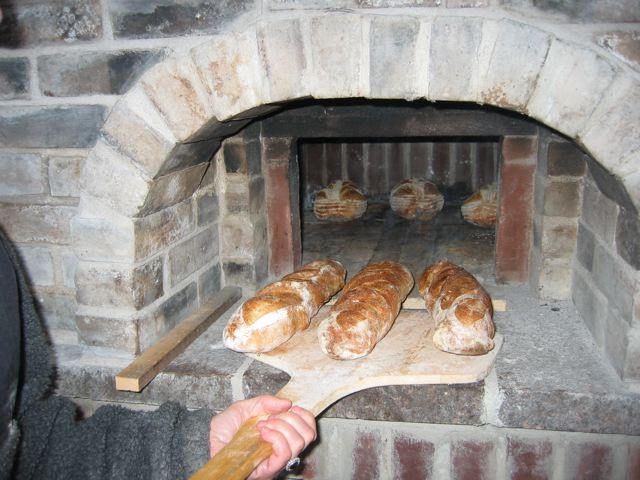
I received e-mail from Bob Cooper (on 10/09/2008) about one of the brick ovens in the Powerhorn neighborhood. I’m still soliciting answers about it, but I did receive a couple of pictures. The “community” in this case appears to be a group of neighbors who built the oven together.
It’s apparently an Alan Scott design based on the book The Bread Builders: Hearth Loaves and Masonry Ovens by Danial Wing and Alan Scott.
Reportedly, its interior is 24 inches by 30 inches.
White Bear Lake United Methodist Church
White Bear Lake, Minnesota (entry added 10/19/2010)
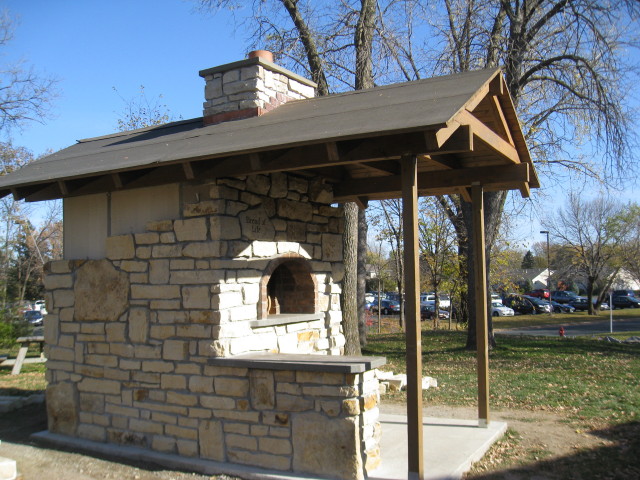
On October 18, 2010, I received an e-mail from Bryce Johnson, the pastor of the White Bear Lake United Methodist Church informing me about an event on October 23, 2010, where the WBLUMC would be celebrating the completion of their outdoor, wood-burning oven, which will be used as a community oven.
Subsequent e-mails revealed that Bryce Johnson had taken the oven-build class at North House Folk School
The oven at WBLUMC was built by church volunteers.
This is what Bryce Johnson had to say about the schedule for using the oven.
We are planning to hold community bake days the first Saturday of every month from 2:00 to 5:00 PM. Bakers are requested to reserve a spot ahead of time on the church website: wblumc.org. The oven has space for 16 loaves each hour. Please indicate the number of loaves you plan to bring. You can reserve up to 2 loaves per bake day.
At this point we are planning to bake throughout the winter, but please check the schedule on the church website before attending.
The current web page for the oven is here
Our Saviour’s Lutheran Church
Minneapolis, Minnesota
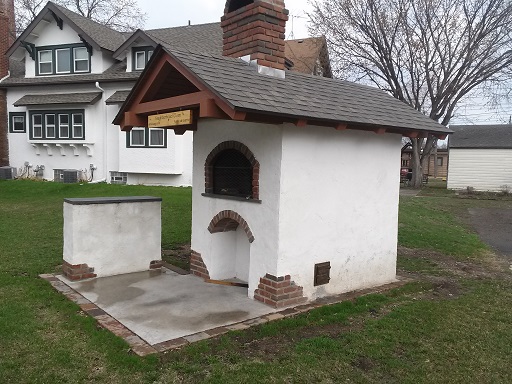
Mike Faust, who helped build the oven at WBLUMC, consulted with a group from Our Saviour’s Lutheran Church to build an oven at that church in 2013.
Some history of their project is here.
Redeemer Lutheran Church
Minneapolis, Minnesota
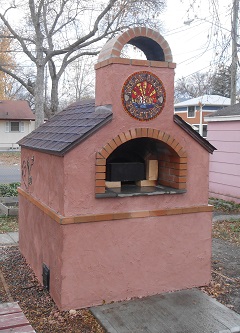
The April 2014 newsletter (linked to from here) for Redeemer Lutheran Church mentions that the church, along with the Harrison Neighborhood Association would start to build a community oven in their community garden on April 21, 2014.
The oven was completed in 2014 and has had its grand opening celebration.
United Theological Seminary of the Twin Cities
New Brighton, Minnesota
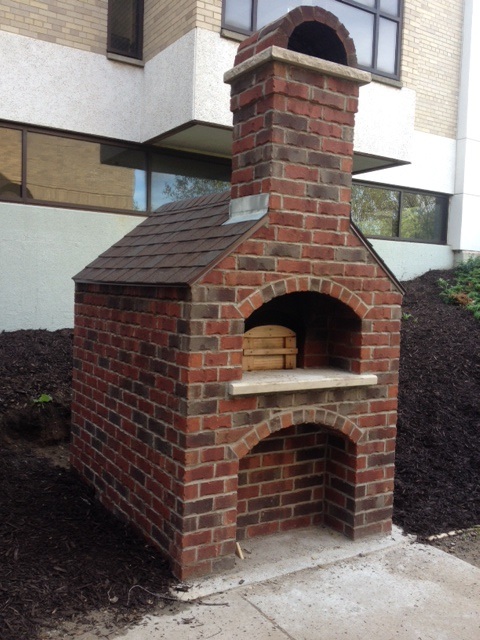
According to an e-mail from Mike Faust United Theological Seminary of the Twin Cities in New Brighton has completed their oven.
According to a representative, “We are really trying to emphasize the communal aspect of this oven…. This oven is available for community use, classes, and community events….” Check with link above for more information.
Twin Cities Planned Community Ovens
There are several ovens somewhere in the process of being desired, being planned, or even in construction in the Twin Cities.
(If you know of any that are not listed here, please let me know.)
Minneapolis
PPERRIA
The Prospect Park East River Road Improvement Association, (PPERRIA for short), has had an effort since 2013 to find a location to host a community oven.
Kingfield Community Garden Group
Another community garden planning a community oven is in the Kingfield neighborhood of Minneapolis. They are in the fundraising process.
Saint Paul
Victoria Park
The planned Victoria Park in St. Paul has a community oven as part of its plan. The park is still very much in the design stage. The oven won’t be built for some time yet.
Other Minnesota Planned Community Ovens
Hillside Public Orchard - Duluth
The Hillside Publick Orchard had a Kickstarter project to raise money to build an oven at their community garden. As sometimes happens, they had to cancel the project because of unresolved legal issues. They are still planning on moving foward in 2014.
Lyndale Gardens - Richfield
The real estate developer in charge of the Lyndale Gardens development in Richfield plans a community oven for the development (mentioned here). In conversations, the current plan is to include an outdoor gas-fired oven for community use.
Other US Community Ovens
There are more people organizing community ovens around the country now. The trick is finding them.
Very few community ovens have their own web sites; some of them are lucky enough to get mentioned in local news that gets put onto the web. If you spot any community ovens, and they are not mentioned here, please point them out to me.
A community oven seems to be made from three elements:
- A community of people willing and able to share an oven.
- A place accessible to the community for the oven to be.
- An oven that can be made available to the community.
The community does not have to be defined by geography, although that is pretty common.
The place does not have to be a public place like a park, although that is common as well. The key is the accessibility. There have been “community ovens” where a business makes an oven available to the community at particular times (when the business is not using it).
The oven can be a simple cob oven or a more complex Quebec-style oven all the way up to a large Alan Scott-style oven.
Different community ovens embody different values for these three elements.
California
There are probably more community ovens in California than I have been able to identify, but there are a couple for which I have found some definite information: California links.
Santa Rosa
The Santa Rosa Community Market had a page about the oven, but it’s gone now. If you go to their home page and put “oven” in their search box, you will find a few mentions of it.
The builder of their oven put a video on YouTube.
Tenderloin National Forest
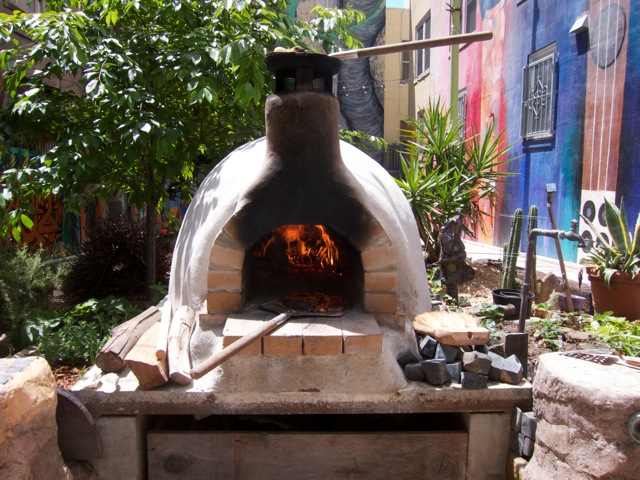
I discovered some blog posts (1, 2) that mentioned a community oven in what was called the Tenderloin National Forest.
I found an early post about its creation (3) and a picture on flickr.
This sounds like an ideal application of the ideals a community oven, one where people are brought together and a public space gets revitalized.
Carbondale, CO
I have also received e-mail from people in Colorado interested in bread clubs and community ovens there. (Avron Gordon also told me about this.)
One of these efforts is focusing on a community oven for Carbondale, Colorado. They tell me that the Carbondale Community Oven is already “in the works.”
These people have drawn inspiration from what’s going in Pittsburgh and in Toronto.
Munising, MI
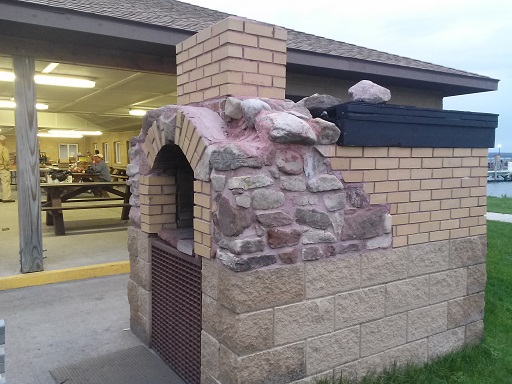
Another oven that has knitted itself into the community is in a town on the Upper Pennisula of Michigan. The oven there was built in 2008, and has been a fixture in many town events. It’s in a waterfront park very near a picnic shelter.
New York State
I have discovered that New York State has become a hotbed of community ovens. There must be a cadre of oven builders and many civic-minded communities able to make this happen. I’m sure I’ve only discovered some of them, because I keep finding more even though most don’t seem to have much information on the web.
Accord, NY
I received e-mail from Charlie Blumstein with pictures of an oven built in Accord, NY. Apparently it was built in 2002-2003.
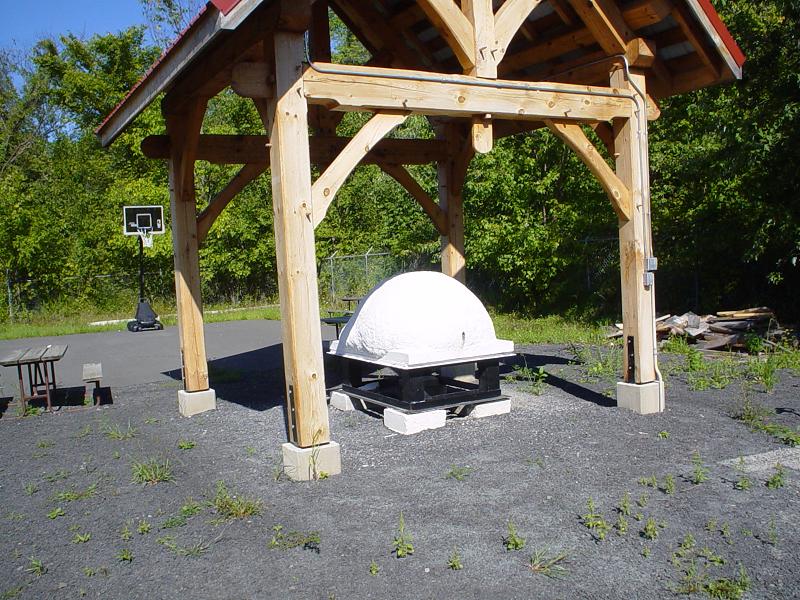
He wrote me again in April, 2010, saying, “We recently had a neighborhood potluck w/ about 70 people….”
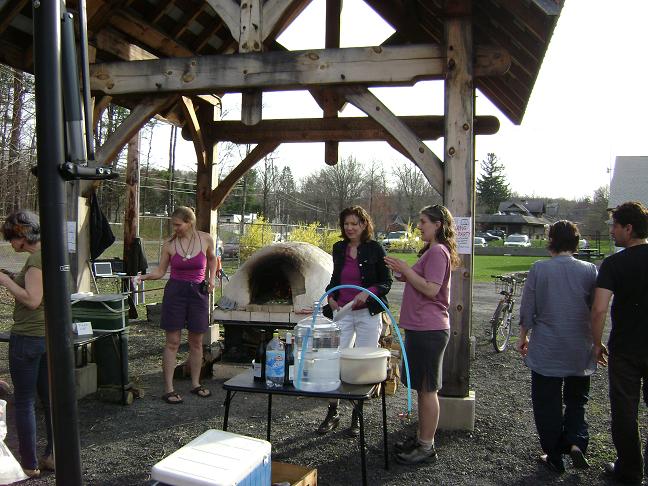
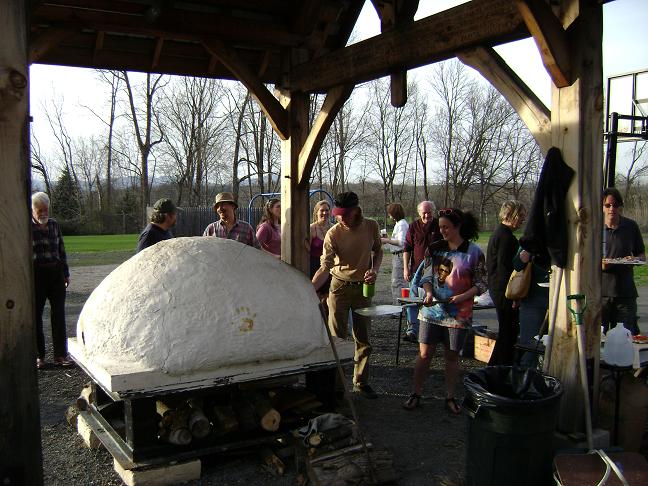
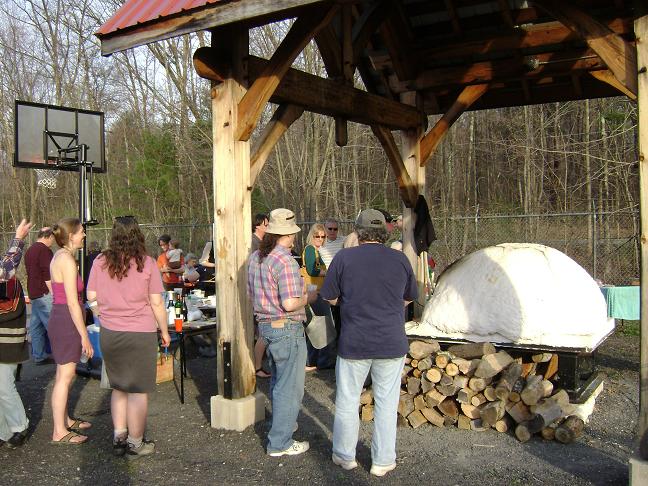
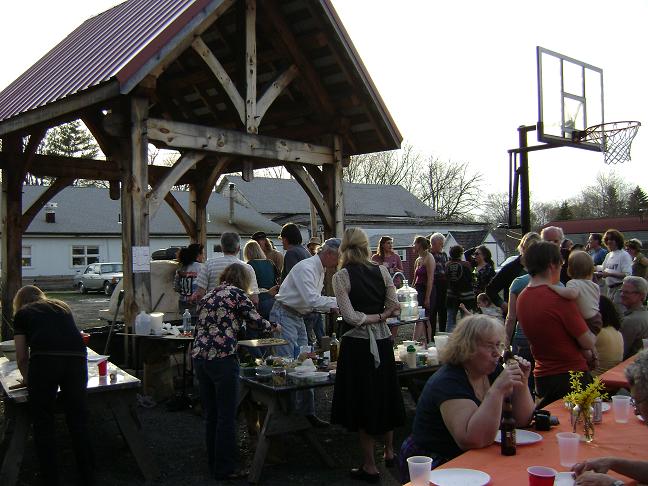
I haven’t been able to find any links relating to this oven.
Albany, NY
This appears to be a small cob oven in a small park.
- hvnb.net - Community
- The Grand Street community bread oven | All Over Albany
- dig your hands in the dirt: The Free School Community bread oven - Peace Oven
Cambridge, NY
This a Quebec-style oven with a coordinated community. Apparently it gets programmed for several events in the community.
Livingston Manor, NY
A farm-based community oven is planned here. It might be more aspirational than definite.
- The Green Effect - Our vision at Wild Roots Farm is to build an outdoor wood-fired community bake oven.
- Wild Roots Farm - Their site hasn’t been updated in half a decade, so it’s not clear how fresh their commitment is to a community oven.
Madison, NY
An arts organization is behind building a cob oven in Madison, NY. They use it for programming and community bread baking.
Independence, OR
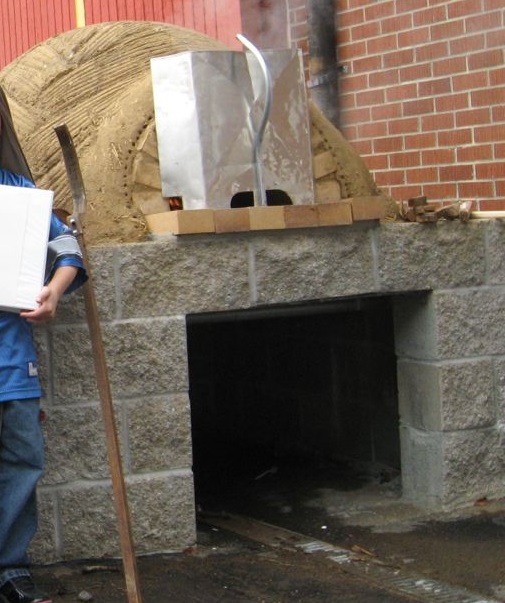
I was trying to track down a web page that mentioned an unused college community oven, when I came across a news article Wood-fired oven back in business that mentioned an oven being available as a community oven again. I e-mailed Kiko Denzer, the author of the book on cob ovens. He told me he led the building of that oven in 2007 and was glad to hear that it was back in use again.
Pittsburgh, PA
Paul Stevens was kind enough to send me two links to articles about community ovens. These were two recent articles from the Pittsburgh Post-Gazette.
- Clarke Thomas: The Mon Valley’s promise - Braddock, North Braddock, Rankin and Swissvale are emphasizing “green development,” including promoting an arts community, launching community food gardens and a community bread oven, and pushing development of the Carrie Furnace site.
- Local baker shaping a bread tradition
- Fired Up: A community oven rises in Braddock
- Polish Hill residents see potential in their neighborhood - Pittsburgh Tribune-Review ?source=rss&feed=2 - A vacant lot on Dobson — the site of a March 2008 fire that destroyed two apartment buildings — is being considered as a location for a community bread oven, Doloughty said. The bread oven would be outdoors and look similar to a brick stove with a pit for building a fire and a shelf for placing bread pans.
- His vision is more community ovens
- Braddock’s Community Oven: A Hot Way to Get People Together ?storyid=200910140917280.21839
Norwich, VT
Norwich is the home of King Arthur Flour and therefore a hot-bed of baking, including bread.
- Erasmus the Mudskipper: Community Oven
- Daily Kos: Bread from the Community Oven
- Community Bread Oven on Flickr
- The Albert Schweitzer Fellowship - “We will also bake weekly at the community brick oven in Norwich, Vermont and donate the loaves to the Haven.”
- Any Way You Slice It | The American Scholar - “Sundays at the community oven aren’t just about the pizza”
- norwich - An email discussion forum for Norwich, VT - info
Canadian Community Ovens
I found some mentions of community ovens in Canada. I’m waiting for more information about them.
Placentia, Newfoundland
- The Charter: News | To protect, preserve and promote - Placentia, Newfoundland, Community Bread Oven is mentioned with no further details
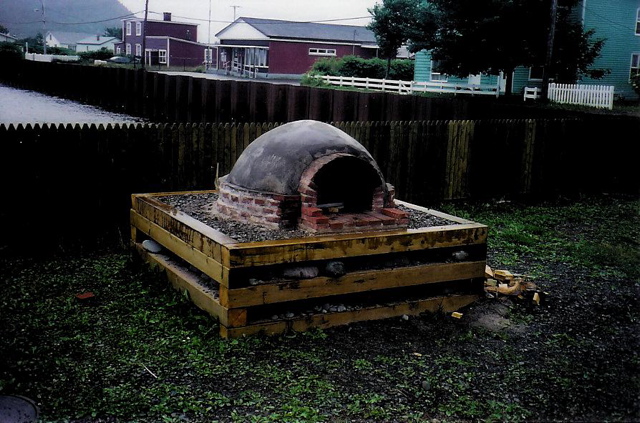
I received a link to some pictures from Ivan Booth in Canada. According to his e-mail, ovens were built around Newfoundland by French oven builders to celebrate the 500-year anniversary of French settlement.
McDonald’s Corner, Ontario
I found out about this when a blogger’s report was brought to my attention. I was then able to find some other links, including ones with pictures.
- MERA - McDonalds Corners-Elphin Recreation & Arts - The host organization
- MERA unveils wood oven
- Lion Lamb - St. Paul’s United Church: Living Bread
- Wood-fired bake oven, McDonalds Corners, Ontario
- Pizza at the Mcdonalds Corners farmers’ market
Toronto, Ontario
There is a lot of community oven activity in Toronto, a lot of it around Dufferin Grove Park and other Toronto parks. Here are some other activities.
- The Public Bake Ovens central site - A well-organized view of the Toronto public bake oven scene.
- Bake Oven - The Betinho Project - Ryerson University - “The Betinho Project is being launched by the building of a Community Bake Oven which will be dedicated to Betinho.” The oven has been built. According to a local source, the oven is mostly used by professional cooks for fund-raising dinners. A related link is here.
- Programs | The Stop Community Food Centre - Includes the The Green Barn oven mentioned above. “While outdoor, wood-burning ovens can be used for anything from bread to casseroles to drying herbs, the most popular use for The Stop’s oven has been weekly do-it-yourself pizza sessions.” In practice, the oven is used once a week only, three months a year.
Montreal, Quebec
- Montréal - Mention of the Mile End Bread Oven
- Pizza for the masses • Spacing Montreal - An article about the Mile End oven I had filed elsewhere
- URBANPHOTO » The Mystery is Solved - Another article about the Mile End oven I had filed elsewhere
Australian Community Ovens
Albury, New South Wales
This may be the closest to the vision of what I see for a community oven in Saint Paul. The first page details the cost of the oven, the process of building a community interested in the oven, and then talks about how it gets used.
- Breaking bread in the park - A local council used its loaf, spent a little dough, and brought a community together.
- TV chef dishes out hints
The Wood Fired Oven is mentioned as an attraction on their web site, but a direct link is currently broken.
Burnside, Adelaide, South Australia
“That a report be brought to the March Meeting of Council on the costs and possible locations for a community oven(s) to be used by our community for social, cultural and community events in line with the City of Albury’s innovative idea for developing community relationships.” – Council minutes of the Feb. 3, 2010 public meeting.
This is an interesting case of the success of a community oven in one city in Australia (Albury) getting noticed by a different city in a different state of Australia.
Cringila, Wollongong, New South Wales
Cringila Community Park
To paraphrase a document I found on the Wollongong City Council web site (search for “bread oven”):
The product of uniting several different cultures was on display Apr. 26, 2005, when the official opening of a communal bread oven took place at the Cringila Community Park. The bread oven, a traditional part of Eastern European cultures, has been designed and assembled through a Wollongong City Council-supported project involving local residents of Macedonian, Muslim and Indigenous background.
MACEDONIAN, Muslim and Aboriginal communities united at Cringila Park yesterday to unveil a communal bread oven.
US Community Ovens on a Map
This is my best data on where there are community ovens in the US. Some locations are mentioned above. Others you will need to look up in the Community Oven Links page.